Why do garden pots need good drainage?
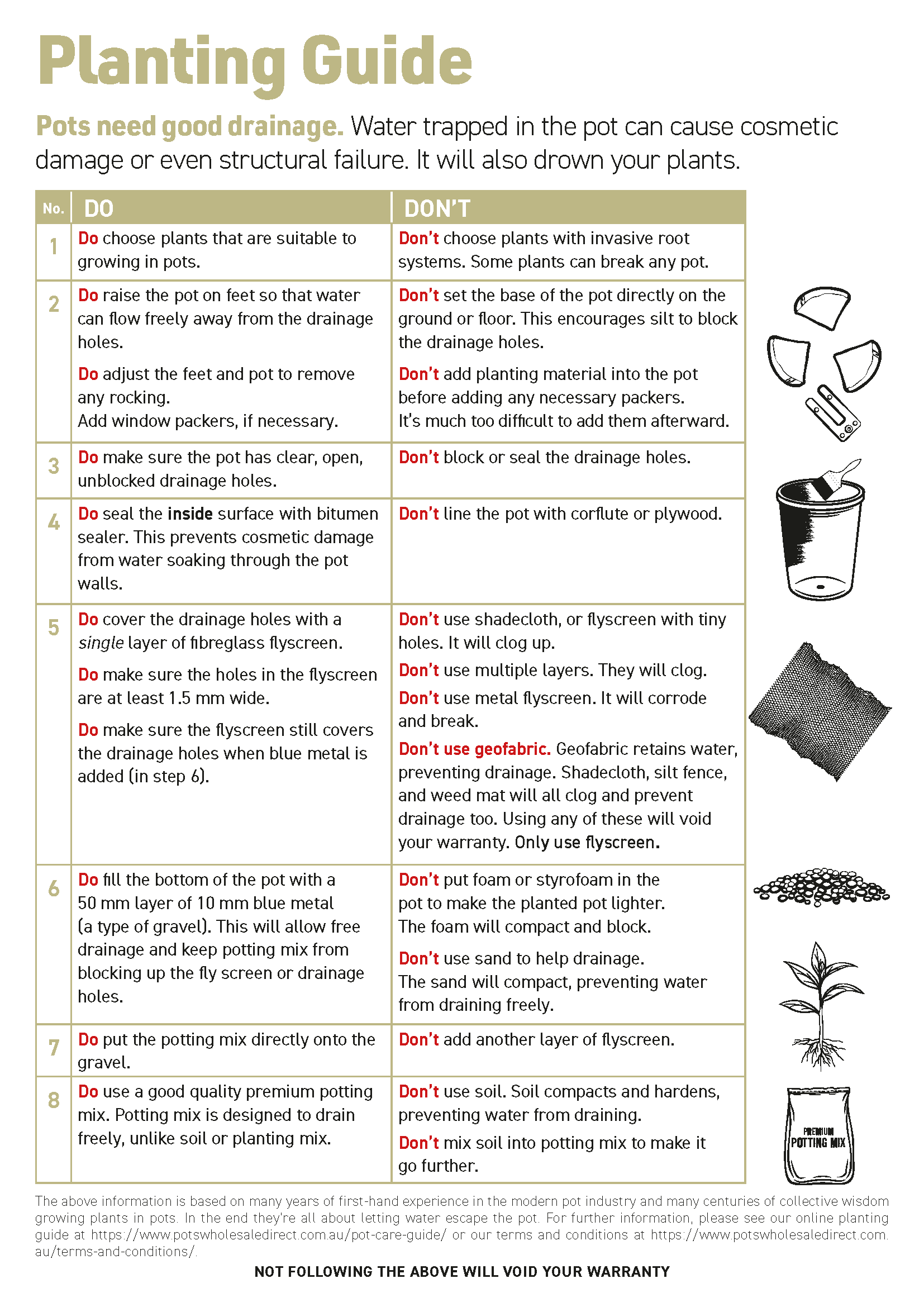
Poor drainage allows water to pool inside the pot, which can drown plant roots, cause efflorescence on the pot surface, and in some cases lead to structural damage. Good drainage is the single most important factor in keeping both your plants and your pots in top condition.
What is the best way to improve drainage in a pot?
We recommend filling the bottom 100mm of your pot with a 10mm aggregate such as blue metal gravel. This allows excess water to flow freely through the drainage holes rather than sitting against the potting mix. Avoid fine aggregates like sand or small pebbles, which can compact and block drainage.
Do I need fly screen in the bottom of my pot?
Yes. Placing a single layer of fly screen over the drainage holes prevents gravel and potting mix from falling through while still allowing water to drain freely. Use fibreglass or plastic fly screen — not metal, which will corrode over time. Holes should be at least 1mm wide, ideally 1.5mm.
What size fly screen do I need for my pot?
We sell pre-cut fly screen in four sizes: 30x30cm, 61x61cm, 91x46cm, and 91x91cm, priced from $1.95. If you are unsure which size suits your pot, our team can help you choose in-store.
What are pot feet and do I need them?
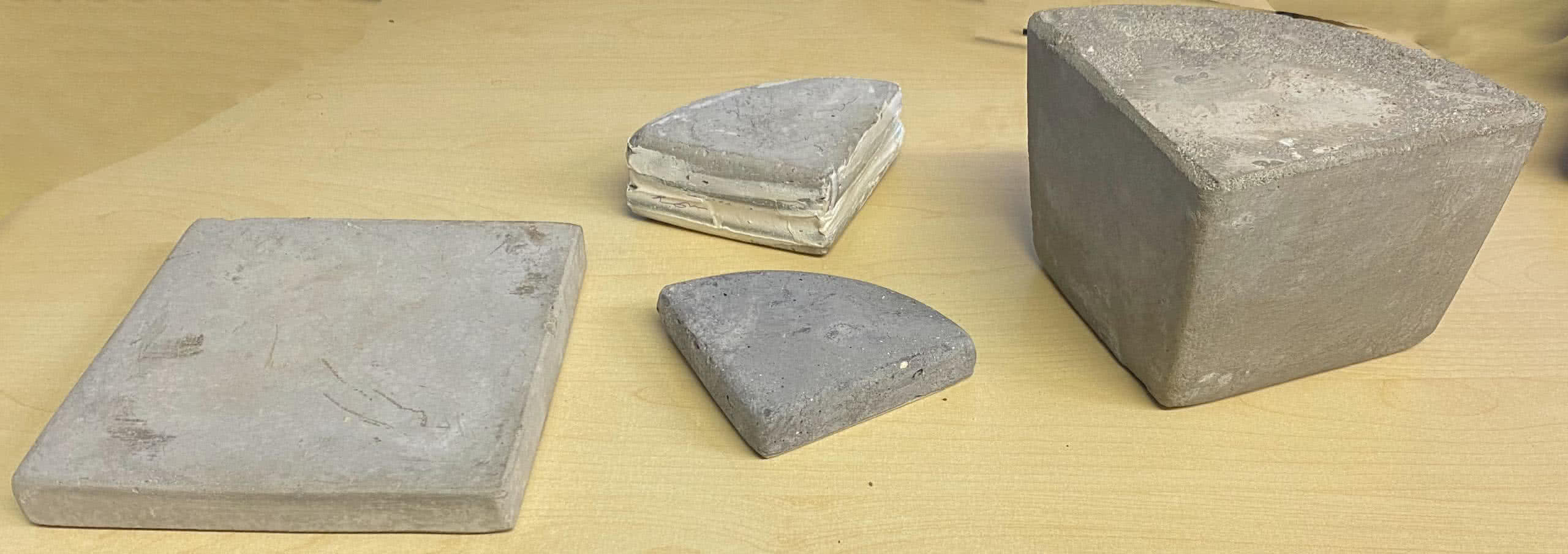
Pot feet are small risers placed underneath your pot to lift it slightly off the ground. This improves airflow, prevents silt from blocking the drainage holes, and helps water escape freely. We stock several styles and sizes of pot feet, including custom options, available from $3.
Can I use any gravel for pot drainage?
We recommend 10mm blue metal aggregate specifically. Finer materials like sand or tiny pebbles compact over time and restrict drainage rather than improving it. We sell 10mm blue metal in 20kg bags for $11.95, or it is available at most hardware stores.
Can poor drainage damage my pot?
Yes. Water trapped inside a pot can cause cosmetic issues such as staining and efflorescence, and in severe cases can lead to structural damage. Raising your pot on feet and using proper drainage aggregate significantly reduces this risk.